
How do you measure the cost of not bringing in external help—delays, burnout, or missed market windows?
March 7, 2026
Let me tell you about a small software company I once knew. They had a brilliant idea for a new app feature. Their internal team, full of smart, dedicated people, felt confident. “We can build this,” they said. For months, they worked long hours. They hit snags with integrating data, especially when trying to pull information into their Qlik Sense dashboards. They spent weeks trying to optimize a Power BI report that was just too slow. Every time they thought they were close, another issue popped up. The app feature kept getting delayed, then delayed again.
What they didn’t realize was the true cost of their “we’ve got this” mentality. It wasn’t just the salary of their team for those extra months. It was much, much more.
Think of it like this: every day your project is late because you’re struggling internally, it’s like a meter running. Not just for your team’s time, but for bigger things.
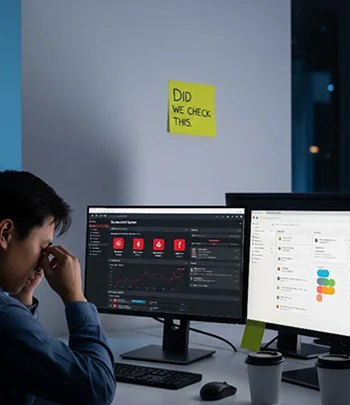
First, there’s the delay cost. For that software company, every week the app feature was delayed meant they weren’t earning money from it. Their competitors might have launched a similar feature in the meantime, stealing away potential customers. If your BI team is stuck for weeks trying to manually reconcile data for a critical Power BI dashboard, that’s weeks your company isn’t making data-driven choices. This could mean missed sales opportunities, delayed product launches, or simply being slow to react to market changes. It’s the cost of being out of sync with the world.
Then there’s burnout. That team, working endless hours, started to get tired. Their morale dropped. They became less creative and more prone to mistakes. Some even started looking for other jobs. When your internal team is constantly fighting with complex Qlik Sense scripting issues they aren’t equipped to handle, or endlessly tweaking a slow Power BI model, it grinds them down. Burnout isn’t just about feeling tired; it leads to lower quality work, increased errors, and eventually, valuable team members leaving. Losing experienced people means even more delays as new staff need to be trained.
Finally, there’s the missed market window. This is perhaps the biggest and hardest cost to measure. For the app company, that brilliant feature, when it finally launched, was no longer unique. A competitor had already released something similar, and the initial excitement and advantage were gone. Imagine your company needs a new Qlik Sense application to analyze a sudden shift in customer behavior. If your team spends months struggling to build it because they lack a specific data modeling skill, by the time it’s ready, that market trend might have already passed. The opportunity to gain a significant competitive edge or capture a new segment of the market is simply gone, perhaps forever.
So, how do you put a number on these silent costs? It’s not easy, but you can start by asking hard questions: How much revenue are we losing for every day this project is delayed? What’s the cost of replacing a burned-out team member? What market opportunity will disappear if we don’t act within the next X months? Sometimes, the cost of not getting help far outweighs the fee of bringing in an expert who can solve the problem in weeks instead of months.
What crucial project or initiative is currently suffering from unacknowledged delays? How much potential revenue or market advantage are you losing daily or weekly by not having key BI insights available? What are the subtle signs of burnout you’re seeing in your team related to persistent, unresolved technical challenges? What would be the biggest “missed market window” for your organization if a current data project isn’t completed on time?
What assumptions are you making about your team’s capabilities—and what if they’re wrong?
It was 10 p.m. on a Wednesday.
The monthly business review was the next morning. The dashboards were almost done—just one last fix. But the numbers didn’t match. Again.
Sara, the BI lead, had been refreshing the Qlik Sense app for the past hour. The regional totals were off, and no one could explain why. The intern had been tasked with the data model, under supervision—but now he had gone home. The supervisor assumed the intern knew how to handle slowly changing dimensions. He didn’t.
What followed was a long, frustrating night of reverse-engineering formulas, patching the load script, and—once again—doing damage control instead of data storytelling.
We’ve All Been There
Every tech-driven team eventually hits this wall. You assume someone understands a concept. You assume a process is well documented. You assume a deadline is realistic.
But what if these assumptions are quietly sabotaging your project?
It’s not about blaming the team. It’s about being honest with what’s really in place—and what’s just assumed to be there.
In the world of Business Intelligence (BI), these silent assumptions are everywhere:
- You assume your developer knows how to write optimized DAX in Power BI.
- You assume your analyst understands the business context of a KPI.
- You assume your team knows how to clean and join source data correctly.
- You assume your QA tester will catch logic issues in time.
But then one wrong filter wipes out a month of stakeholder trust. One incorrect measure leads to a bad decision. One mismatch in granularity breaks a sales report—and the client notices.
On one project, a retail client asked for a sales dashboard showing daily performance across 150 stores. Sounds simple, right?
We assigned it to a mid-level developer who seemed confident. We assumed she understood the difference between transactional vs aggregated tables. We assumed she’d handle time intelligence properly.
She didn’t.
She grouped daily sales using static calendar logic. It broke when the fiscal calendar changed. The dashboard worked fine—until it didn’t.
That mistake cost the client their confidence. It cost us two weeks of rework. All because we didn’t ask: “Do you fully understand this part of the problem?”
Why This Happens
- Everyone’s Busy – No one wants to micromanage.
- Overconfidence Bias – You trust your team. That’s good—but dangerous if unchecked.
- Silent Pressure – Team members may not speak up when they’re unsure.
- Familiarity Illusion – If someone uses a tool like Power BI or Qlik Sense, you assume they know how to use it well.
So, What Can You Do Instead?
- Ask More Questions
Don’t ask, “Do you get it?” Ask, “Walk me through how you plan to do it.” - Do Skills Spot Checks
Run quick mini-challenges. Assign a mini task in Power BI or Qlik to see real capability—not just confidence. - Promote Psychological Safety
Let your team know it’s okay to say “I’m not sure.” Normalize the idea that asking for help is smart, not weak. - Review Before It’s Too Late
Instead of reviewing at the end, do a 30% and 70% check-in. Catch the missteps before they spread. - Use Peer Reviews
Have two developers swap dashboards and explain each other’s logic. You’ll instantly spot knowledge gaps.
Assumptions can feel harmless. Until they explode into delays, rework, and lost trust.
You don’t have to know everything. Your team doesn’t either. But you do need to know what they don’t know—and that requires curiosity, clarity, and che cking in.
Don’t wait until 10 p.m. the night before a deadline to realize your assumptions were wrong.
Recent Articles



Archives:
- March 2026 (3)
- February 2026 (2)
- January 2026 (2)
- November 2025 (8)
- October 2025 (2)
- September 2025 (3)
- August 2025 (5)
- July 2025 (6)
- June 2025 (2)
- May 2025 (1)
- April 2025 (2)
- March 2025 (2)