
DoD’s Impact on Our Lives: Part II
October 18, 2025

The DoD also engages in technology transfer to bring military technologies to the civilian market. While less publicized and quantified in consumer terms, these technology transfers serve a similar purpose of benefiting the broader economy.
The US Department of Defense (DoD) has pioneered and funded numerous technologies that have been spun off for civilian use, radically transforming daily life, commerce, and industry. The dual-use nature of many defense technologies, which have both military and commercial applications, is the basis for many of these developments.
The Internet
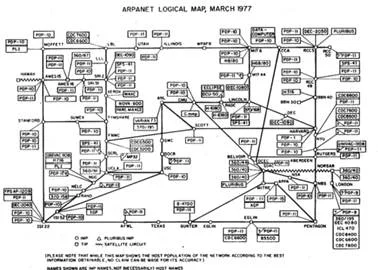
In the late 1960s, the DoD’s Advanced Research Projects Agency (ARPA) funded the development of the Advanced Research Projects Agency Network (ARPANET) to create a computer communications system without a central core. The network’s main purpose was for scientific and academic collaboration. The network linked computers at Pentagon-funded research institutions. ARPANET’s core technologies, including packet switching and the TCP/IP protocol, became the technical foundation of the modern internet. The project laid the groundwork for a global network that has revolutionized communication, commerce, and information sharing as we know today.
Global Positioning System (GPS)
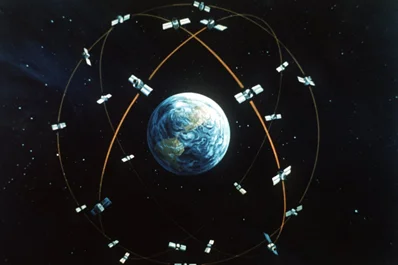
Developed by the US military in the 1970s, GPS was initially designed for precision bombing and military navigation. The first satellites were launched in the 1980s, and its effectiveness was demonstrated during the first Gulf War. By the 1990s, the DoD made GPS accessible for civilian use, albeit with a deliberately scrambled signal known as “selective availability”. After selective availability was switched off during the Clinton administration, GPS became a game-changer for commercial navigation, surveying, transportation, and logistics.
Jet engines
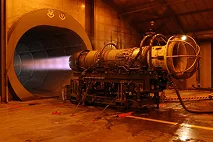
Military investment via the DoD played a crucial role in advancing jet engine technology and driving its transfer to the civilian sector, primarily by funding research into higher performance, efficiency, and reliability. Though initially pursued by multiple countries for military aviation in the 1940s, the DoD’s continued investment into areas like the Integrated High Performance Turbine Engine Technology (IHPTET) program spurred innovation in advanced materials, aerodynamics, and control systems, which directly benefited commercial turbofan development. The development of the high-bypass turbofan engine, which is far more fuel-efficient and quieter than early turbojets, was critical for commercial air travel and emerged from military transport aircraft needs. The technology matured and was adapted for civilian applications, revolutionizing air travel in the 1950s by providing faster, more efficient commercial aircraft. The technology is now used in marine transportation and energy production.
Night vision
First developed during World War II to provide soldiers with an advantage in nighttime combat, early night vision technology relied on image intensification to amplify existing light. Advances in night vision technology have led to a wide range of civilian applications, including search and rescue, law enforcement, security surveillance, wildlife conservation, and enhanced driver safety in some vehicles.

Semiconductors and microelectronics
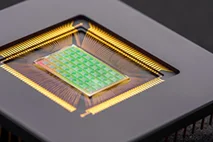
For decades, the DoD has been a major investor and purchaser of microelectronics, driving innovation and development in the semiconductor industry. Ongoing investments continue to support the domestic production of advanced semiconductors for defense and national security.
Military funding and procurement helped create a robust semiconductor industry in the US, laying the groundwork for advancements in consumer electronics, computing, telecommunications, and other high-tech sectors.
Nuclear Energy
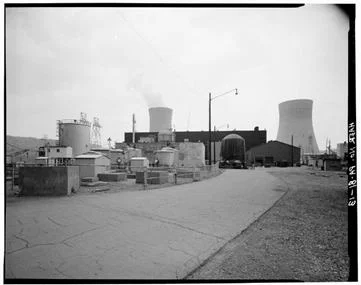
The development of nuclear energy traces from pre-World War II scientific discoveries by figures like Enrico Fermi, Otto Hahn, Lise Meitner, and Leo Szilard, primarily in European and U.S. research centers. This foundational work rapidly accelerated during the Manhattan Project (1942–1946) under Leslie Groves and J. Robert Oppenheimer at sites including Los Alamos, Oak Ridge, and Hanford, focusing on military applications. Following the war, naval propulsion development led by Admiral Hyman G. Rickover utilized this technology before President Eisenhower’s 1953 “Atoms for Peace” program promoted civilian use. The first commercial nuclear power plant, leveraging naval reactor technology, was commissioned in Shippingport, Pennsylvania, in 1958.
Drones
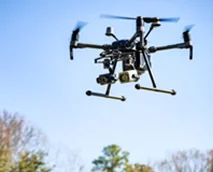
The concept of unmanned aerial vehicles can be traced back to the early 20th century. During World War I, the U.S. military funded the “Kettering Bug,” an aerial torpedo, though it never saw combat. During the Cold War, the need for surveillance over high-risk areas spurred significant DoD investment. Drones were developed to gather intelligence without risking pilots’ lives. The technologies refined through military investment—including advanced sensors, GPS, flight stabilization, and high-capacity batteries—eventually led to the development of smaller, more affordable, and user-friendly consumer drones.
Digital photography
The foundational concepts of converting images to electronic signals date back to the late 19th century. However, the development of the semiconductor image sensor was the critical advance that made modern digital photography possible. In the 1960s and 1970s, military and intelligence agencies, including the CIA and the US Air Force, developed some of the earliest digital imaging technology for aerial and satellite surveillance. Early digital cameras were designed to capture high-resolution images of enemy installations. This technology evolved into the digital cameras we use today in smartphones, professional photography, and webcams.
Doppler radar
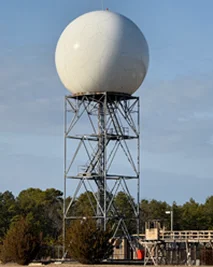
Doppler radar was developed for military applications during World War II, primarily for detecting enemy aircraft and monitoring air traffic. It was an offshoot of standard radar technology that could measure the velocity of moving objects. Its ability to track movement led to its widespread adoption in civilian weather forecasting to detect storms measure precipitation, and issue tornado warnings.
Superglue

The technology behind superglue was accidentally discovered during World War II when a scientist at Eastman Kodak, seeking materials for clear plastic gun sights, found that cyanoacrylate compounds were extremely sticky and unusable for the intended purpose. The connection to the military extended further during the Vietnam War, when medics discovered they could use a spray version of the glue to temporarily seal soldiers’ wounds and stop bleeding. This battlefield innovation helped save lives and later paved the way for modern medical-grade adhesives. The commercial potential was later recognized, and it was first sold commercially in 1958, becoming a household name for its bonding properties.
Duct tape
During World War II, a factory worker at a military plant suggested to her supervisor that a waterproof, cloth-backed tape would be more effective than paper tape for sealing ammunition boxes. The idea was adopted, and the military used the material for sealing equipment. After the war, the product was repurposed for household repairs and became a versatile tool.

Computer-aided design (CAD)
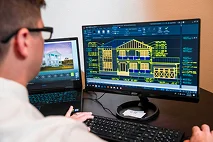
Early computer-aided design, or CAD, was pioneered by researchers at MIT’s Lincoln Laboratory, which was primarily funded by the DoD. The goal was to develop advanced computer graphics for military defense applications, like radar. Lincoln Laboratory was tasked with developing advanced computing for military defense applications, with radar being a key focus. Sketchpad and other early graphical tools were developed to explore better human-computer interaction for military systems.Though Sketchpad itself had limited distribution, the ideas it introduced—such as interactive graphics, object-oriented programming, and geometric constraints—were revolutionary. Commercial software companies adopted this technology to enable modern engineers, architects, and designers to create precise digital models of products. Everything from new cars and buildings to kitchen appliances is now designed using CAD software.
Parallel computing
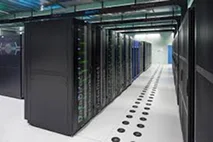
DARPA investments during the 1970s and 1980s were fundamental to the development of parallel computing, originally for military-related supercomputing tasks, which subsequently led to the widespread civilian use of multi-core processors.The agency sought to build supercomputers capable of performing many calculations simultaneously for tasks like climate modeling and signal processing. This work paved the way for modern, multi-core processors used in everything from high-end servers and supercomputers to personal laptops and gaming consoles. The ability to run complex processes at high speeds is a direct result of this military research.
Voice assistants and natural language processing

Early efforts to develop speech recognition technology were backed by the DoD, which hoped to enable computers to understand human language for military command and control purposes. In the 1970s, DARPA’s Speech Understanding Research (SUR) program provided a significant amount of funding to several research institutions.Through DARPA’s funding, Carnegie Mellon University created the “Harpy” speech system in the mid-1970s, which could understand over 1,000 words. While this vocabulary size is small by today’s standards, it was a massive leap forward at the time and proved the viability of the technology. The explicit goal of this research was to enable military personnel to interact with computers using voice commands, particularly for tasks where hands-free operation was vital. Early uses included aircraft controls and message sorting in high-stress environments. While the early versions were rudimentary, the continued research helped create the fundamental technology behind today’s voice-activated assistants, such as Siri and Alexa, and powers real-time translation services.
Automated toll collection
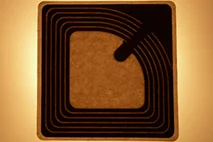
An electronic identification system, initially developed at Los Alamos National Laboratory to track livestock, was repurposed for the transportation industry. In 1973, researchers Steven Depp, Alfred Koelle, and Robert Freyman at the Los Alamos National Laboratory developed and demonstrated a passive RFID tag system that used modulated backscatter. The system was intended to help the U.S. government develop a more efficient and humane way of identifying and tracking livestock. This research was also part of broader efforts to develop electronic identification for a range of military and government applications, including secure tracking of items and personnel. This technology, based on modulated backscatter, was commercialized and later adapted for modern automated toll collection systems, like E-ZPass. It is also used in railroad cars, shipping containers, and vehicle tracking systems.
- Advanced Research Projects Agency Network (ARPANET)
- Jet Engine
- Night-vision device
- CHIPS Act Advances DOD’s Emphasis on Microelectronics
- Semiconductors and the CHIPS Act: The Global Context
- The Atoms for Peace program and the Third World
- Manhattan Project
- Shippingport Atomic Power Station
- The History of Drones: From Military to Mainstream
- Pentagon to Increase Low-Cost Drone Production in U.S.
- Doppler Weather Radar
- Early Developments of Weather Radar during World War II
- How World War II led to the invention of super glue
- The Serendipitous History of Superglue
- Duct tape
- A Man-machine Graphical communication system
- Sketchpad
- Whirlwind – test bed for key technologies
- Sketchpad computer program
- Innovation Timeline
- History of supercomputing
- Parallel computing
- A Brief History of ASR: Automatic Speech Recognition
- Development (history) and applications of speech recognition systems
- Siri
- Selected military applications of automatic speech recognition technology
- Radio-frequency identification
- GPS: How pieces of metal in space know where you are
Recent Articles




Archives:
- February 2026 (2)
- January 2026 (2)
- November 2025 (8)
- October 2025 (2)
- September 2025 (3)
- August 2025 (5)
- July 2025 (6)
- June 2025 (2)
- May 2025 (1)
- April 2025 (2)
- March 2025 (2)
- February 2025 (4)