
Data To Decisions
November 27, 2025


“Automation is no longer optional. It is the key to staying competitive in a data-driven world.”
Data is the backbone of financial and risk management. Yet for many organizations, turning data into action remains a slow and manual process.
In one case, a financial institution found that skilled professionals were spending several hours each day pulling together spreadsheet-based reports on risk and performance. Instead of focusing on analysis and decision-making, they were tied up in repetitive tasks that drained both time and value.
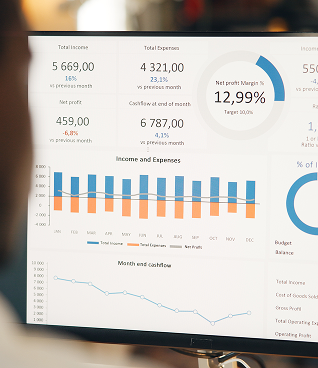
The solution was not just a new report—it was a platform. A system that automated daily reporting, delivered dynamic visualizations, and reduced time spent on manual work. The result was better alignment across teams and a faster path from data to decision.
WHY REPORTING REMAINS STRUGGLE
Many institutions, especially in insurance and investment, face unique challenges. They operate with lean teams, heavy regulatory requirements, and legacy systems that are difficult to modernize. Reporting processes often grow organically over time, leaving gaps, inefficiencies, and inconsistencies.
Manual reporting is still common. Even when there is a push for automation, teams are often stretched too thin to redesign processes from the ground up. This is where external expertise and structured approaches become critical.
BUILDING A UNIFIED DATA MODEL
One of the biggest obstacles to effective reporting is the absence of a single, trusted source of data. Different departments pull information from different systems, leading to conflicting results and confusion.
The answer lies in building a centralized data model—one that integrates multiple sources, ensures accuracy, and scales across teams. Once a clean data foundation is in place, tools like Power BI can deliver true value by presenting insights through clear, dynamic dashboards.
BEYOND THE DASHBOARD
A common misconception is that BI tools work out of the box for complex financial data. In reality, without the right data structures behind them, front-end dashboards remain limited. The real breakthrough comes from combining data engineering with visualization—allowing teams to see relationships and comparisons that were previously hidden.
THE VALUE OF AUTOMATION
The benefits of automation go beyond speed. Reports that once took hours can now be available instantly each morning. More importantly, the time saved can be redirected to higher-value activities—such as analyzing risks, identifying opportunities, and making strategic decisions.
This shift turns reporting from a burden into a driver of business intelligence. It empowers professionals to use their expertise where it matters most.
LOOKING AHEAD
Manual reporting is not just inefficient—it wastes talent. As data volumes grow and regulatory demands increase, organizations must adopt long-term data strategies. Whether taken step by step or across the enterprise, the goal is the same: build strong data foundations, embrace automation, and enable smarter decisions.
Automation is no longer optional. It is the key to staying competitive in a data-driven world.
Recent Articles



Archives:
- February 2026 (2)
- January 2026 (2)
- November 2025 (8)
- October 2025 (2)
- September 2025 (3)
- August 2025 (5)
- July 2025 (6)
- June 2025 (2)
- May 2025 (1)
- April 2025 (2)
- March 2025 (2)
- February 2025 (4)